Up to the 20th Century: Pre-Mechanization
Before mechanization of clothes washing started, doing the laundry required considerable time and physical effort. In the nineteenth century, washing laundry was the “most detested household chore” (Woersdorfer, 2017, p. 104). Beecher and Beecher Stowe (1869, p.334) named it “the American housekeeper’s hardest problem.” It earned more complaints than any other household task in the nineteenth century (Strasser, 1982, p. 106).
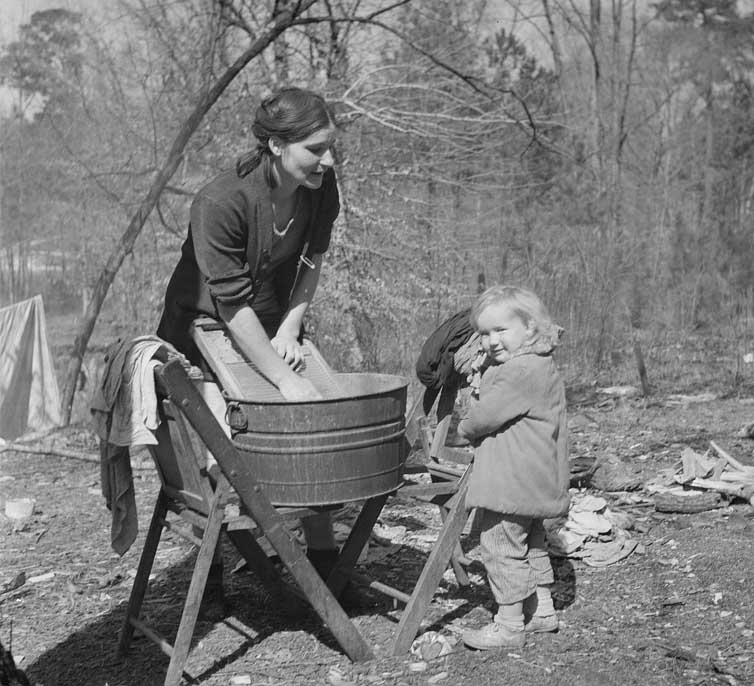
The earliest “technologies” developed to aid those doing laundry were the washboard, homemade soap, and washing dolly. The washboard was invented around 1800 and was almost universally used in the nineteenth century (Cohen, 1982, p. 91). The dolly was a wooden pole or paddle that was used to agitate clothes in a tub of water (Hardyment, 1988, p. 55 as cited in Woersdorfer, 2017). For many families prior to World War I, especially those struggling to make ends meet, housewives were still doing laundry without indoor plumbing or mechanization (Cowan, 1983, p. 166). Even in 1920, washboards were the prevailing equipment for clothes washing, and only 8% of US families owned a washing machine (Lebergott, 1993, p. 113 as cited in Woersdorfer). The washboard was used for several decades into the twentieth century, and the washing dolly was used at least until the 1920s (Association of Home Appliance Manufacturers, 2017). The 1938 photo above shows a coal miner's daughter washing clothes with a washboard (Wolcott, M.P., 1938, September. Bertha Hill, West Virginia. Farm Security Administration/Office of War Information Photo Collection, Library of Congress.
http://www.loc.gov/pictures/item/fsa2000030782/PP/). The first photo below shows a migrant worker in 1937 in a camp in Birmingham, Alabama washing clothes outside with a washboard.
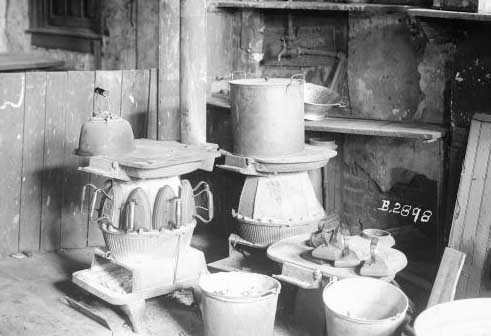
In the nineteenth century, laundry day was "Blue Monday." On Sunday, women sorted clothes, hauled water, and heated them on a stove in the kitchen or over a fireplace in the yard. They soaked the clothes overnight. On Monday, women drained off the water, hauled and heated more water, and added the water to the clothes with soda and salt. They scrubbed the clothes on a washboard and then boiled them on a stove while stirring them with a washing dolly. They had to wring clothes out by hand and rinse them several times to remove soap. They then added a bluing agent in the second stage of rinsing to remove yellow tones and make clothes appear brighter. Next, they added starch before wringing the clothes again and hanging them on a clothesline to dry (Woersdorfer, 2017, pp. 98-99). Ironing took place the following day, Tuesday (Cohen, 1982, p. 7). Women heated irons on a hearth or stove, and ironing was a hot chore with irons weighing up to 10 pounds (Woersdorfer, p. 99). Mondays and Tuesdays continued to be the days for washing and ironing, respectively, well into the twentieth century. The second photo below, taken in the period 1902-1914, shows a stove with about 10 irons around it.
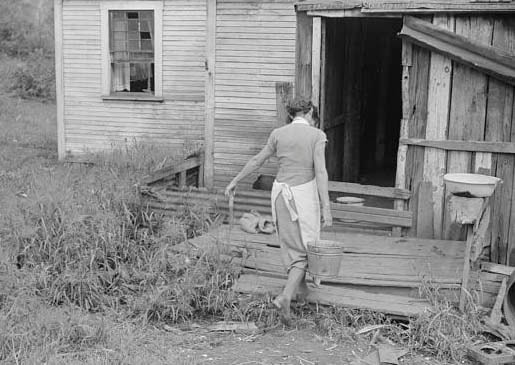
One wash, one boiling, and one rinse used about 50 gallons of water. Buckets and boilers might weigh 40 to 50 pounds. Water-soaked clothes were also heavy. Caustic substances were hard on arms and hands. In the summer, the heat of the fire, water, and ironing made work unpleasant. In the winter, women needed to carry large amounts of water in the cold (Strasser, 1982, p. 105). Transporting water from outside the house and getting rid of the used water was an everyday task until the advent of piped water in the late nineteenth and early twentieth century. Adult women carried 1-6 gallons at a time, and 3 gallons on average (Davidson, 1982, pp. 7-8, 14, 19). The third photo below shows a coal miner's daughter carrying water into her house in 1938.
Before mechanization of clothes washing started, doing the laundry required considerable time and physical effort. In the nineteenth century, washing laundry was the “most detested household chore” (Woersdorfer, 2017, p. 104). Beecher and Beecher Stowe (1869, p.334) named it “the American housekeeper’s hardest problem.” It earned more complaints than any other household task in the nineteenth century (Strasser, 1982, p. 106).
The earliest “technologies” developed to aid those doing laundry were the washboard, homemade soap, and washing dolly. The washboard was invented around 1800 and was almost universally used in the nineteenth century (Cohen, 1982, p. 91). The dolly was a wooden pole or paddle that was used to agitate clothes in a tub of water (Hardyment, 1988, p. 55 as cited in Woersdorfer, 2017). For many families prior to World War I, especially those struggling to make ends meet, housewives were still doing laundry without indoor plumbing or mechanization (Cowan, 1983, p. 166). Even in 1920, washboards were the prevailing equipment for clothes washing, and only 8% of US families owned a washing machine (Lebergott, 1993, p. 113 as cited in Woersdorfer). The washboard was used for several decades into the twentieth century, and the washing dolly was used at least until the 1920s (Association of Home Appliance Manufacturers, 2017). The 1938 photo above shows a coal miner's daughter washing clothes with a washboard (Wolcott, M.P., 1938, September. Bertha Hill, West Virginia. Farm Security Administration/Office of War Information Photo Collection, Library of Congress.
http://www.loc.gov/pictures/item/fsa2000030782/PP/). The first photo below shows a migrant worker in 1937 in a camp in Birmingham, Alabama washing clothes outside with a washboard.
In the nineteenth century, laundry day was "Blue Monday." On Sunday, women sorted clothes, hauled water, and heated them on a stove in the kitchen or over a fireplace in the yard. They soaked the clothes overnight. On Monday, women drained off the water, hauled and heated more water, and added the water to the clothes with soda and salt. They scrubbed the clothes on a washboard and then boiled them on a stove while stirring them with a washing dolly. They had to wring clothes out by hand and rinse them several times to remove soap. They then added a bluing agent in the second stage of rinsing to remove yellow tones and make clothes appear brighter. Next, they added starch before wringing the clothes again and hanging them on a clothesline to dry (Woersdorfer, 2017, pp. 98-99). Ironing took place the following day, Tuesday (Cohen, 1982, p. 7). Women heated irons on a hearth or stove, and ironing was a hot chore with irons weighing up to 10 pounds (Woersdorfer, p. 99). Mondays and Tuesdays continued to be the days for washing and ironing, respectively, well into the twentieth century. The second photo below, taken in the period 1902-1914, shows a stove with about 10 irons around it.
One wash, one boiling, and one rinse used about 50 gallons of water. Buckets and boilers might weigh 40 to 50 pounds. Water-soaked clothes were also heavy. Caustic substances were hard on arms and hands. In the summer, the heat of the fire, water, and ironing made work unpleasant. In the winter, women needed to carry large amounts of water in the cold (Strasser, 1982, p. 105). Transporting water from outside the house and getting rid of the used water was an everyday task until the advent of piped water in the late nineteenth and early twentieth century. Adult women carried 1-6 gallons at a time, and 3 gallons on average (Davidson, 1982, pp. 7-8, 14, 19). The third photo below shows a coal miner's daughter carrying water into her house in 1938.